Frequently Asked Questions and Links
1. Who invented the spinning wheel? Where and when?
![]() Figure 1: Transition from hand spindle to mounted spindle |
No individual invented the spinning wheel. It evolved over a long period of time. Since ancient times spinning has been done on a spindle, which is basically a stick with a stone or weight attached. Sometime between 500 and 1,000 A. D., somewhere in China or India (the scholars are not sure) someone turned a spindle on its side and shaped the weight or whorl into a pulley, which was connected to a drive wheel by a cord. |
![]() Figure 2: Indian spinning wheel |
This wheel-driven spindle is the simplest form of spinning wheel and all wheel structures are based on this basic pulley system. |
![]() Figure 3: European spinning wheel |
These wheels reached Europe about the 12th century. Pictures from 14th-century England show a spinning wheel raised up on a table. |
![]() Figure 4: Bobbin and flyer assembly |
A bobbin/flyer mechanism, which made spinning
continuous and therefore faster, appeared at the beginning of the 16th century. Sometime in the 17th century a foot-pedal or treadle was added to some 'low' wheels so the spinner could work sitting down. |
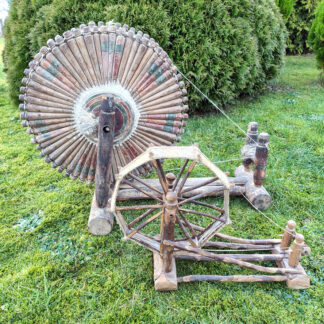
Figure 5: Horizontal spindle wheel from the collection of Michael Taylor |
Colonists brought the design of a large spindle wheel to North America when they came from Europe. The great wheel is sometimes called a walking wheel or a wool wheel. |
Figure 6: Horizontal bobbin and flyer wheel from the collection of Michael Taylor |
They also brought the many different types of
bobbin/flyer, treadle wheels. These are often called flax wheels. Every culture developed some kind of spinning wheel because everyone needed yarn to weave into cloth in the days before factory-spun yarn and mill-woven fabric. The variety of spinning wheels is enormous. Even today, spinning-wheel makers are trying to build better spinning wheels for the many hobby handspinners all over the world. |
2. What are the basic structures of spinning wheels?
Let's discuss spinning wheels in terms of physical
properties that we see by looking at them.
What does a spinning wheel do? It is a large tool or a small simple machine designed to
twist fiber into thread. If you look at the basic mechanics of wheels, they are all based
on pulleys. This leads to two major categories:
1) Where is the spindle mechanism, which twists the fibers, in relationship to the drive wheel? That gives us the subcategories of horizontal or vertical wheels depending on the alignment.
2) What is the source of energy turning the drive wheel? It is either the hand or the feet.
Under horizontal wheels we can further subdivide by whether it has a spindle or a bobbin/flyer. Horizontal spindle wheels, both large and small, are hand-turned, with a few rare exceptions.
Bobbin/flyer wheels are foot-powered, i.e., a rod [footman] connects the foot pedal [treadle] to the drive-wheel axle. Again there are a few rare exceptions. Another subdivision is whether these components are attached to a table or a frame.
Vertical wheels all have bobbin/flyer units, and they are
foot-powered, i.e., they have treadles. In some cases the bobbin/flyer unit is
above the drive wheel, and in some cases it is below. They also can be further subdivided
depending on whether these components are attached to a table or a frame.
Sometimes components will be doubled, and we find spinning wheels with double treadles,
double bobbin/flyers, or double wheels.
| Alignment of spindle or bobbin/flyer unit to drive wheel |
Figure 7: Horizontal spindle alignment |
![]() Figure 8: Vertical spindle alignments Left: Spindle above Right: Spindle below |
![]() Figure 9: Wheel with horizontal spindle alignment |
Types of spindle heads |
![]() Figure 10, top to bottom: direct drive, bat's head, Minor's head |
Horizontal bobbin and flyer wheels with treadles |
![]() Figure 11: On a table |
![]() Figure 12: On a frame |
Vertical bobbin and flyer wheels with treadles |
![]() Figure 13: On a table |
![]() Figure 14: On a frame |
![]() Figure 15: Bobbin/flyer below drive wheel |
Double component wheels |
![]() Figure 16: Double flyers |
![]() Figure 17: Double wheel/double treadle |
3. Where can I find plans to build a
spinning wheel?
David Bryant of Knutsford, Cheshire, England, is the author of Wheels and Looms,
Making Equipment for Spinning and Weaving. Although his book is now out of print, he
offers plans for twelve different types of wheels on his Web site www.craftdesigns.co.uk.
See also the DYI section of Chris Jordan's Web site: www.jb.man.ac.uk/~caj/wheel.html.
If you are interested in wood working tools, especially old ones, check out the Web site of the Early American Industries Association http://www.eaiainfo.org.
4. Where can I learn about different types of looms?
Janet Meany publishes The Weavers Friend, a newsletter for rag rug weavers. She
maintains a library of loom manuals for many late 19th- and 20th-century looms. Her
website can be found at: www.weaversfriend.com.
David Bryant also has plans for looms (see Question 3 above).
5. Where can I find information on contemporary spinning wheels?
Try "Frequently Asked Questions about Spinning Wheels," a site maintained by
Chris Jordan at: www.jb.man.ac.uk/~caj/wheel.html.
Also look at the Apple Hollow Farm web site: www.applehollow.com.
To identify 20th century New Zealand spinning wheels, go to the Web site of Mary Knox of Wellington, NZ: www.nzspinningwheels.info.
6. Where can I find basic information
about handspinning and a group of handspinners in my area?
Interweave Press publishes Spin-Off magazine which has some basic instructions
about spinning on their Web site, www.interweave.com.
Go to "Spinning." They also have a list of guilds of handspinners.
7. Where can I find information about hand weaving and
groups of weavers?
There are several sites. Interweave Press also publishes Handwoven magazine. Go
to their site (see above) and click on "Weaving."
The Handweavers Guild of America also has a site which lists weaving groups around the
country www.weavespindye.org/.
The Complex Weavers are a group for more advanced weavers. One of their many study groups
focuses on early weaving books and manuscripts: www.complex-weavers.org.
8. Where can I find general information about fiber arts and quilting?
One of the earliest and most comprehensive Web sites for fiber arts is maintained by Ruth Stowe http://www.weavingworld.ca.
The Web site of contemporary quilter Sylvia Einstein is a good place to start for quilting
www.sylviaeinstein.com.